
CLICK ON PICTURE TO OPEN: "Hospitality 2015: Game Changers Or Spectators" From Deloitte
CLICK ON PICTURE TO OPEN: "Hospitality 2015: Game Changers Or Spectators" From Deloitte
Comments Off on “Hospitality 2015” From Deloitte: Hotel Ownership And Management Must Position Companies For Future Success, Profitability And Risk Reduction
Filed under Green Lodging, Insurance, Management And Ownership, Risk Management, Training
“…Â it creates a healthier environment for those working at a hotel, motel or bed and breakfast as more of the cleaning supplies use fewer chemically infused ingredients, fewer linens are laundered,  cans, bottles and other goods are recycled and lighting, entertainment, and heating, ventilation and air conditioning systems become more energy saving and efficient…”
“Growing numbers of consumers, including families and conference planners, want to know that the hotel where they plan to stay is ‘green,’ ” says Amey Marrella, commissioner of the state Department of Environmental Protection, who this past week announced that the state just certified its 15th “green lodging.”
Being green, says the commissioner, can include increased energy efficiencies, water-use reductions or reducing, reusing and recycling materials found in a hotel, motel or bed and breakfast.
In addition, Marrella says being a certified green lodging hotel can provide that hotel or motel with a competitive marketing tool, in addition to the savings provided by reduced energy use.
By “greening a hotel,” the institution can become more efficient, become friendlier to its surrounding environment and, say DEP officials, bolster its bottom line.
For more:Â Â http://www.theday.com/article/20100822/BIZ02/308229886/-1/BIZ
Comments Off on Hospitality Industry Trends: Hotel Ownership Should Consider “Green Lodging” Certifications As Healthier And Safer Business Practices
Filed under Green Lodging, Health, Injuries, Liability, Risk Management, Training
“…inspection reports obtained by the newspaper showed the apartments did not have properly maintained fire escapes, exit lights, fire extinguishers or smoke alarms…”
The lawsuit filed by the families of Gerardo Reyes Perez and Humberto Hernandez Vanegas, who both died in the apartment building fire, was dismissed with prejudice, according to online court 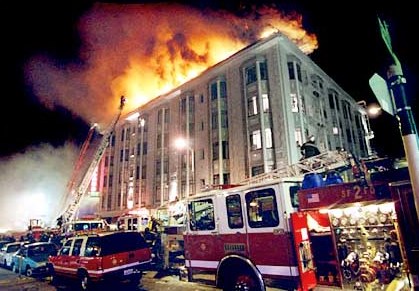 records. A dismissal with prejudice means the lawsuit cannot be refiled against building owner Corazon Peterson, also known as Corazon Moen, and her insurance companies.
A second wrongful death lawsuit has been dismissed against the owner of the Independence Hotel Tap that burned in February 2009, killing three men. The suit was dismissed after a “minor†settlement.
But the amount of the settlement is unknown. Judge John Damon approved an order to seal documents related to the case, including the settlement paperwork, and Moen as well as attorneys representing both sides of the suit did not respond to calls for comment.
The Hotel Tap building failed its last three fire inspections prior to the blaze that also killed Ronald Stuart Beck Sr. His family also filed a wrongful death suit, which was dismissed in June.
Moen denied the failed inspections when questioned by the Winona Daily News last year, saying smoke alarms and fire extinguishers were in the building at the time of the fire. But inspection reports obtained by the newspaper showed the apartments did not have properly maintained fire escapes, exit lights, fire extinguishers or smoke alarms.
The families of Perez and Vanegas contended in their lawsuit that none of the issues were addressed at the time of the February blaze, saying the building was in “general disrepair.â€
The suit specifically cites anguish experienced by Perez’s brother Jose Reyes Perez and sister Blanca Morales. The pair were “at the scene of the blaze at its pinnacle and could only watch as the building burnt uncontrollably, and knowing their brother was inside, unable to escape,†the suit states.
Moen in her answer filed in March acknowledged the failed inspections but said the problems were fixed before the fire.
For more:Â http://www.winonadailynews.com/news/local/article_34815248-ada3-11df-bd70-001cc4c002e0.html
Comments Off on Hotel Industry Fire Risks: Hotel Managment Must Have “Properly Maintained Fire Escapes, Exit Lights, Fire Extinguishers And Smoke Alarms”
Filed under Claims, Injuries, Liability, Maintenance, Risk Management, Training
Police have started a program to educate hotel employees on how to spot prostitutes and drugs. One warning sign” When a guest with local address books a hotel room for seven or eight days, the Inquirer says.
Hotel prostitution became a high-profile last year when a woman who had advertised erotic services in a Craigslist ad was beaten and fatally shot at close range at the Boston Marriott Copley Place. Police ultimately arrested Philip Markoff, a medical student who was dubbed the Craigslist Killer, for her killing and other robberies of women in hotels. Markoff committed suicide in jail earlier this week.
Crime has been climbing at airport hotels over the last six to eight months, and Capt. Dan MacDonald III says that it can be linked to prostitution.
“This violence has resulted in numerous robberies, assaults and one homicide all directly related to prostitution going on at Philadelphia airport hotels,” the Daily News quotes him as saying.
Philly isn’t alone in fighting prostitution activity in airport hotels
For more:Â Â http://travel.usatoday.com/hotels/post/2010/08/philly-police-bust-airport-hotel-prostitution-ring/108959/1
Comments Off on Hotel Industry Risks: Hotel Managers And Employees Must Spot Prostitution And Drug Risks When Local Guests Book Rooms For One-Week Or More
Filed under Crime, Liability, Risk Management, Training
The Affordable Care Act sets a minimum threshold for what’s known as the “medical loss ratio” — the percentage of premium dollars that go into medical care (a “loss” from Wall Street’s view) rather than into overhead or profits. For plans sold to small businesses or directly to individuals, that ratio must be at least 80 percent; for plans sold to large groups, it must be at least 85 percent.
For big insurance companies that sell predominantly to big employers, the medical loss ratio shouldn’t be hard to meet. With their economies of scale, these insurers and employers together provide coverage at relatively low administrative cost (although, it should be noted, Medicare’s overhead is even lower). But smaller insurers that deal primarily with individuals or small businesses will have a tougher time. Among other things, they typically lose 8 percent of premiums on commissions to agents and brokers who sell policies on their behalf. (Once the insurance exchanges exist, much of that cost will disappear.) These are also the insurers most likely to bilk consumers, since individuals buying coverage on their own typically lack the knowledge — or ability — to bargain as shrewdly as corporate benefits managers do. (The exchanges should also help with improved information and bargaining leverage.)
There’s leeway in the rule in two key places. The law doesn’t dictate a precise formula for calculating the medical-loss ratio. It’s up to the administration which “care management” activities count as medical care, whether taxes should be part of the calculation, and the extent to which carriers can average out the ratio among different plans. And while the law calls for the requirement to take effect starting in January 2011, the Department of Health and Human Services has the authority to phase it in; Sebelius could, for instance, set the floor at 70 percent for 2011 and then gradually ratchet it up until 2014. Some insurance and employer lobbyists have urged the administration to move slowly, lest insurers unable to meet those requirements go out of business. Then again, insurers that can’t meet those requirements are, by definition, less efficient.
For more:Â Â http://www.tnr.com/blog/jonathan-cohn/77080/get-ready-sebelilus-v-insurers
Comments Off on Hospitality Industry Health Care: Smaller Hotel Owners Will Struggle With “Medical Loss Ratio” And Must Find Hospitality Industry Health Care Insurance Specialist
Filed under Health, Insurance, Risk Management
The floor collapsed and dropped almost a foot, resulting in damage to the structures of both the lounge and the hotel.
 The Luxor also sought compensation as an “additional insured.†The lease between the casino and developer required the latter to name Luxor as an additional insured on all policies. No doubt the Luxor assumed (that dangerous word!) that this language covered its exposure to loss.
However, the developer’s insurance policy restricted the coverage of an additional insured. Luxor’s entitlement was limited to indemnification for money it paid to people injured by the developer’s acts or omissions. The casino was not entitled to compensation for its own losses…
The casino invoked the Unfair Insurance Claims Practices Statute, a law adopted by numerous state legislatures.
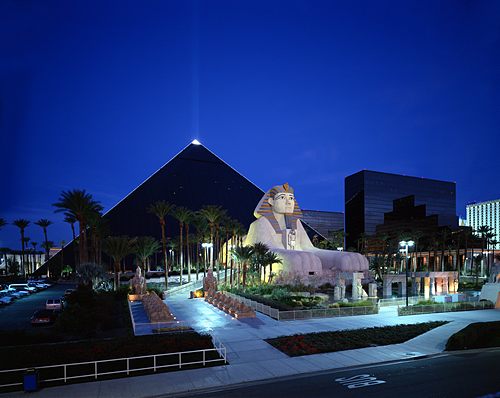
The Luxor Hotel & Casino Hotel contracted with a developer to construct and operate a restaurant called the Cathouse Lounge (nothing is subtle in Vegas) on the mezzanine level. The developer gutted the space, made structural modifications and installed new fixtures and equipment.
One night during Cathouse’s third month in operation, while a large crowd was enjoying good food and fun ambiance, a portion of the structure began to buckle. The floor collapsed and dropped almost a foot, resulting in damage to the structures of both the lounge and the hotel. The lounge was evacuated immediately. Thereafter the county Department of Building Services ordered Luxor to close both the Cathouse and damaged portions of the hotel pending repairs. Luxor hired an expert to determine the cause of the floor’s failure. Turns out the renovations were insufficient to support the sizeable number of people the lounge attracted.
Both Luxor and the developer paid to repair the structural deficiencies and for damage to their respective property. The Cathouse reopened in three weeks and submitted a claim to its insurance company. The Luxor also sought compensation as an “additional insured.†The lease between the casino and developer required the latter to name Luxor as an additional insured on all policies. No doubt the Luxor assumed (that dangerous word!) that this language covered its exposure to loss.
However, the developer’s insurance policy restricted the coverage of an additional insured. Luxor’s entitlement was limited to indemnification for money it paid to people injured by the developer’s acts or omissions. The casino was not entitled to compensation for its own losses. Yikes!
This is a very significant limitation. Luxor was seeking compensation for costs of repairing structural damage to its own facility, replacing its own destroyed property and interruption of its business. The insurance company denied the claim based on the indemnification-only coverage, and the court upheld the denial. This was not the plan Luxor had in mind when it included the requirement that the casino be listed as an additional insured in the developer’s lease.
But lawyers are clever folks and Luxor was well-represented. The casino invoked the Unfair Insurance Claims Practices Statute, a law adopted by numerous state legislatures. This act requires, among other consumer protection provisions, that insurance companies respond to claim letters within 30 days of receipt. The insurance company in the Luxor case waited months before acknowledging the hotel’s claim. The penalty for violation is mandatory payment of the claim. This is true even though the policy does not otherwise cover the claim. So the court awarded Luxor the money it sought. Sometimes the back door can be a great alternative.
For more:Â Â http://www.hotelworldnetwork.com/legal/read-your-insurance-contract-closely-then-read-it-again
Comments Off on Hospitality Industry Insurance Risk Management: Las Vegas Hotel Has Insurance Policy That Fails To Name Hotel As “Additional Insured”, Complicating Payment Of A Submitted Claim For Structural Damage
Filed under Claims, Insurance, Liability, Risk Management, Uncategorized
A mix of laundry chemicals at the Crowne Plaza Hotel in Eagan sent six employees the hospital…
 Paramedics were called to the hotel at 2700 Pilot Knob Road around 10:30 a.m. after a hotel worker collapsed near the pool. Two laundry chemicals were found nearby – Destainer (Sodium Hypochlorite solution) and Sour 21 (Hydrofluorosilicic acid), which when combined form a corrosive chemical that can be fatal if ingested.
The six employees were taken to Regions Hospital in St. Paul. Five were treated and released, with one staying overnight for observation.
The hotel was evacuated. 59 guests were registered for a stay at the hotel at the time of the incident, but not all were there at the time.
Comments Off on Hotel Industry Health Risks: Hotel In Minnesota Has Laundry Chemical Sicken 6 Employees
Filed under Health, Injuries, Liability, Risk Management, Training
Among the 497 foodborne outbreaks with a laboratory-confirmed single etiologic agent reported, norovirus was the most common cause, followed by Salmonella. Among the 18 reported deaths, 11  were attributed to bacterial etiologies (five Salmonella, three Listeria monocytogenes, two Escherichia coli O157:H7, and one Clostridium botulinum), two to viral etiologies (norovirus), and one to a chemical (mushroom toxin).
Foodborne agents cause an estimated 76 million illnesses annually in the United States (1). Outbreak surveillance provides insights into the causes of foodborne illness, types of implicated foods, and settings of foodborne infections that can be used in food safety strategies to prevent and control foodborne disease. CDC collects data on foodborne disease outbreaks submitted from all states and territories. This report summarizes epidemiologic data for the 1,097 reported outbreaks occurring during 2007 (the most recent finalized data), which resulted in 21,244 cases of foodborne illness and 18 deaths. Among the 497 foodborne outbreaks with a laboratory-confirmed single etiologic agent reported, norovirus was the most common cause, followed by Salmonella. Among the 18 reported deaths, 11 were attributed to bacterial etiologies (five Salmonella, three Listeria monocytogenes, two Escherichia coli O157:H7, and one Clostridium botulinum), two to viral etiologies (norovirus), and one to a chemical (mushroom toxin). Four deaths occurred in outbreaks with unknown etiologies. Among the 235 outbreaks attributed to a single food commodity, poultry (17%), beef (16%), and leafy vegetables (14%) were most often the cause of illness.
For more:Â Â http://www.foodconsumer.org/newsite/Non-food/Disease/foodborne_illness_1208100621.html
Comments Off on Hospitality Industry Foodborne Illnesses: Poultry (17%), Beef (16%) And Leafy Vegetables Cause Most Illnesses Reported That Included 18 Deaths In 2007 In U.S.
Filed under Food Illnesses, Health, Insurance, Liability, Risk Management
A “willful†violation can occur if the employer knew that he was violating a standard or if he was reckless. A good way to convince an OSHA inspector of recklessness (and thus willfulness) is to ignore employee complaints of danger, or worse, accident reports.
A lawyer knowledgeable on OSHA issues will serve as a buffer between the agency and the company’s management. He can make sure that responses to document requests are neither too broad nor too narrow.
A careful employer will review employee complaints, accident reports and minutes of safety meetings, and make sure that every item properly is evaluated and if found to be a problem, either fixed or scheduled for fixing with alternative protective measures implemented in the interim. Employers should not allow unaddressed items in such documents to smolder in their files, ready to be fanned into willfulness by an OSHA inspector.
For more:Â Â http://ehstoday.com/standards/target-new-osha-sheriff-1339/index1.html
“…Â remote attackers installed a malicious program into the card processing system of Englewood, Colo.-based hotel chain Destination Hotels & Resorts. Guests at 21 Destination properties may have been subjected to credit card theft…”
 “..the Westin Bonaventure Hotel & Suites in Los Angeles disclosed a possible data breach of its POS systems dating back to 2009. Also, between November 2008 and May 2009, the computer systems of some Radisson hotels in the United States and Canada were illegally accessed. And the computer systems of Wyndham Hotels & Resorts were accessed on two separate occasions by cybercriminals who stole customers’ card numbers, expiration dates and other data…”
Cybercriminals last year targeted hotels more than any other industry for credit card theft, according to a recent report by data security company Trustwave. Hotels are being targeted because they have large amounts of credit card data and frequently neglect to implement the most basic security precautions, such as changing default passwords or ensuring programs are up to date, said Nicholas Percoco, senior vice president of Trustwave’s SpiderLabs.
As a result, attackers commonly gain entry into a hotel’s network by exploiting default passwords on point-of-sale (POS) applications, added Dave Ostertag, manager of investigative response at Verizon Business. From there, customized malware is loaded onto the hotel’s transaction server that steals credit card information as a transaction occurs.
In March, the Westin Bonaventure Hotel & Suites in Los Angeles disclosed a possible data breach of its POS systems dating back to 2009. Also, between November 2008 and May 2009, the computer systems of some Radisson hotels in the United States and Canada were illegally accessed. And the computer systems of Wyndham Hotels & Resorts were accessed on two separate occasions by cybercriminals who stole customers’ card numbers, expiration dates and other data.
For more:Â http://www.scmagazineus.com/rampant-hotel-data-theft/article/174579/
Comments Off on Hospitality Industry Data Theft: Hotel Owners Must Prevent Breaches Of Credit Card Processing Systems By “Cyber-Criminals” Who Install “Malicious Programs” To Steal Data
Filed under Insurance, Liability, Privacy, Risk Management, Theft