Author Archives: Ida

Hotel Industry Theft Risks: Hotel Management Must Make Valet Parking Areas Secure From Thieves Who Hide In Vehicles

Police said a casino surveillance video shows a man handing his Hummer over to the valet. The valet parked the Hummer in the casino’s secured lot without knowing there were three men hiding inside the vehicle. The men had access to all the cars parked in the lot, police said.

 Three Cadillac Escalades were stolen from a secured valet parking lot Saturday at Detroit’s MGM Casino Hotel, police said. The video shows the men stealing the Escalades.

When hotel customers asked the valet employees to retrieve their vehicles, the drivers were puzzled to find that the Escalades had disappeared from the parking lot. It may sound like a clever crime, but this same type of theft was acted out in an episode of the TV show “Las Vegas.” The episode was re-run last week. The men could have been copying the fictional thieves.

For more:  http://www.clickondetroit.com/news/26439694/detail.html#

Comments Off on Hotel Industry Theft Risks: Hotel Management Must Make Valet Parking Areas Secure From Thieves Who Hide In Vehicles

Filed under Crime, Insurance, Liability, Risk Management, Theft

Hotel Industry Health And Safety Risk: San Francisco Hotel Guests Are Exposed To "Carbon Monoxide" That May Have Come From Outside Through Air Intake System

Fire officials believe the cause of the flu-like symptoms is carbon monoxide after measuring high levels of the potentially deadly gas, a San Francisco Fire Department spokeswoman said.

“The hotel staff promptly contacted the fire department to assess the situation and assist with transporting the guests to area hospitals for treatment,” Singer said.

Investigators discovered that the air intake for the hotel is on the Stevenson Street side of the building so it draws air in from the outside, Talmadge said. “They’re thinking the carbon monoxide might have come from outside through their intake system.”

Four guests at the San Francisco Marriott Marquis fell ill late Thursday after being exposed to carbon monoxide in their downtown hotel rooms, authorities said. The four guests were flight attendants staying in four separate rooms at the hotel, located at the intersection of Fourth and Mission streets, hotel spokesman Sam Singer said.

The San Francisco Marriott Marquis issued the following statement today: “Early this morning four guests at the San Francisco Marriott Marquis complained of flu-like symptoms. The hotel staff promptly contacted the fire department to assess the situation and assist with transporting the guests to area hospitals for treatment.

The four guests were transported to San Francisco General Hospital and St. Francis Memorial Hospital where they “are now doing well,” Singer said.

“Initially we believed it to be the heating system in the rooms,” fire Lt. Mindy Talmadge said. “But after further investigation we determined it couldn’t be the heating system because they use a steam system which doesn’t use carbon monoxide.”

For more: http://www.sanfranciscosentinel.com/?p=102638

2 Comments

Filed under Guest Issues, Health, Injuries, Liability, Management And Ownership, Risk Management

Hospitality Industry Health Insurance: Hotel Owners Should See Benefits In Providing Health Insurance For Employees As Studies Start To Analyze Data

Researchers at Cornell University in Ithaca, N.Y., said they have found that providing health insurance for workers increases job performance.

Researchers conducted a study reviewing six months of job data to see if providing insurance would affect “job anxiety, tardiness, absenteeism and overall task performance,” the university said in a release. They found only task performance was affected, but a parallel study that concerned workers with health insurance that also included mental health insurance showed a slight increase in job tardiness.

“We wanted to take a scientific look at whether having health insurance made a noticeable difference,” said Sean Way, assistant professor at the Cornell School of Hotel Administration and one of the authors of the study, titled “The Impact of Health Insurance on Employee Job Anxiety, Withdrawal Behaviors and Task Performance.”

Way called the study results that showed increased tardiness among workers provided with mental health insurance “puzzling.”

For more:   http://www.upi.com/Business_News/2011/01/05/Insurance-shown-to-help-work-performance/UPI-11801294259532/

2 Comments

Filed under Health, Insurance, Labor Issues, Management And Ownership, Training

Hotel Industry Trends: Technological Advances Will Be "Among The Most Important Forces Driving Hotel Industry"

The Fraunhofer Institute believes that technological advances with be among the most important forces driving the hotel industry, leading to some major changes over the next ten years.

  • The hotel room is decorated to meet guests’ particular tastes
  • The bath water is just how they like it
  • The minibar is stocked with their preferred range of drinks
  • Their favourite music is playing in the background.
  • Guests will be checked in by robots, which will also provide a first class range of services for the duration of their stay.
  • Automated ‘smart’ rooms will be fully equipped to meet the needs of guests.
  • Guests will have their own profiles, which they can either enter via a PIN on a smart phone or which are transmitted by means of biometric authentification.

This data can then be used to individually adapt the lighting, air conditioning and even the colour of the room. In the hotel rooms of the future the entire infrastructure will be designed to aid relaxation:

  • Gentle curves instead of sharp edges
  • Smart ‘energy beds’
  • Wall displays with giant screens, serving as an interactive interface to all the different communication channels and providing a workspace for business travellers.

However, technological innovation is not the only topic under consideration in planning the hotels of the future, and ecological aspects will play an increasingly important role in meeting the needs of guests.

For more:  http://www1.messe-berlin.de/vip8_1/website/Internet/Internet/www.itb-berlin/englisch/Media_Centre/Press_Releases_and_News/index.jsp?lang=1&newslang=en&newssys_id=31619&source_oid=550&year=2011

4 Comments

Filed under Guest Issues, Management And Ownership, Technology

Hospitality Industry Technology Issues: Hotel Management Will Feel Increased Pressure In 2011 To Offer "Free Wireless Internet Access" With Resultant Needs To Secure Network

A comfy mattress and a hot breakfast are still important to hotel guests, but free wireless Internet access is the most desired amenity, according to a new survey of 53,000 travelers.

Hotels are likely to feel more pressure to offer the service at no charge, said Stuart Greif, vice president and general manager of the global travel and hospitality practice at J.D. Power.

The survey by J.D. Power & Associates found that free Wi-Fi was the most important feature for guests in nearly every segment of the hotel industry.

  • The most expensive hotels were the least likely to offer free Wi-Fi.
  • Of guests staying at midscale hotels, 96 percent said they got free Wi-Fi, as did 64 percent of guests at budget hotels, according to the survey of guests who stayed in hotels from May 2009 to June 2010.
  • None said they got free Wi-Fi at luxury hotels.
  •  Free Wi-Fi is available at many businesses.

At the Ritz-Carlton luxury hotel chain, the fee for Wi-Fi access is a top complaint among guests, said spokeswoman Vivian A. Deuschl. (The new Ritz-Carlton in downtown Los Angeles charges $12.95 a day.) Some Ritz-Carlton hotels offer free Internet access in the lobbies and other public spaces. “We have no immediate plans to change the policy, but it’s an ongoing subject of discussion,” Deuschl said.

For more:  http://www.dallasnews.com/sharedcontent/dws/fea/travel/thisweek/stories/DN-guestswant_0102tra.ART.State.Edition1.1481b10.html

4 Comments

Filed under Guest Issues, Management And Ownership, Risk Management

Hospitality Industry Employee Risks: Hotel Owners Should Maintain “Employment Practices Liability” Insurance Coverage For Wrongful Termination, Harassment And Discrimination Suits

EPL insurance policies protect businesses from the financial costs incurred from employment-related lawsuits filed for a range of reasons, from wrongful termination to harassment to discrimination and so on. More than half of claims are filed against small businesses…however, less than two percent of businesses with fewer than 50 employees purchase EPL insurance.

  • A recent Chubb survey found that 36 percent of private company executives understand the gravity of their exposure to EPL suits and 21 percent said they had an experience with an EPL suit in the last five years.
  • While every EPL policy is different, a company with $1 million in sales and 50 employees can likely get a policy for about $7,000 per year—$10,000 if they also take out coverage protecting directors and officers in the event of liability lawsuits against them personally.
  • The leading charge filed in discrimination cases is an allegation of racial discrimination, at 36 percent of cases, according to EEOC figures from 2009. Gender-based discrimination was alleged in 30 percent of cases.
  • Age-based claims made up 24 percent
  • Disabled claims tallied 23 percent.

In many cases, multiple allegations are made. One of the growing charges, according to the EEOC, is retaliation against employees for making discrimination claims, which can involve a job switch that the employee views as a demotion related to the initial claim.

“If you go to your supervisor and say you’ve been harassed by Joe, you can bring that claim to EEOC, but then if they decide to fire you or cut back your hours, that is the retaliation component,” says Tom Hams, Aon Risk Solutions’s EPL practice leader. “That retaliation component can survive much more than the allegation itself.” The employer may win on the allegation of whether or not you were discriminated against, but they may lose a case based on the retaliation claim for moving the complainant to a different job or office setting.

For more:  http://www.inc.com/guides/2010/12/how-to-reduce-employment-liability-claims_pagen_2.html#

Comments Off on Hospitality Industry Employee Risks: Hotel Owners Should Maintain “Employment Practices Liability” Insurance Coverage For Wrongful Termination, Harassment And Discrimination Suits

Filed under Employment Practices Liability, Insurance, Labor Issues, Liability, Management And Ownership

Hospitality Industry Health Issues: Second Annual Federal Bed Bug Summit To Be Held On February 1 and 2, 2011 In Washington DC

Momentum is gathering behind a planned federal summit on bed bug control. Bed bugs are now spreading beyond the nation’s beds. They’ve been found in numerous public spaces, including federal office buildings. The Federal Bed Bug Work Group encompasses several agencies, including the EPA and the departments of Housing and Urban Development, Agriculture, Defense and Commerce. Also, the National Institutes of Health and the Centers for Disease Control and Prevention.

The summit will be held from 8:30 a.m. to 6:00 p.m. at the Georgetown University Hotel and Conference Center  in  Washington DC 

Comments Off on Hospitality Industry Health Issues: Second Annual Federal Bed Bug Summit To Be Held On February 1 and 2, 2011 In Washington DC

Filed under Conferences, Guest Issues, Health, Liability, Management And Ownership, Training

Hospitality Industry Internet Security Risks: Hotels Can Offer Wireless Internet With WPA2 (Wi-Fi Protected Access 2) To Offer Guests Greatest Wireless Security

IS WIRELESS INTERNET IN HOTELS SAFE?

  • The short answer is: No. Wi-Fi was born to be convenient, not secure. Unsecured, unprotected wireless is everywhere. When a device connects to unprotected Wi-Fi, all the data stored on that device is available to a hacker with the proper sniffing tools.
  • The longer answer is: It depends on what kind of wireless that is provided.
  • Free, unsecured Wi-Fi is the least secure. Any Wi-Fi connection, whether in public, at home, or in the office, that is shared with anyone with any wireless device, lacks encryption of the data packets streaming from the connected devices.
  • A simple Firefox add-on called Firesheep can allow anyone with a Firefox browser to sniff out other devices using the same Internet connection, and to spy on their browser activity. Even if the victim’s login is encrypted, once they visit an unencrypted site, their data becomes vulnerable.
  • Wi-Fi with a WEP encryption is slightly more secure. Wired Equivalent Privacy was introduced in 1997 and is the original version of wireless network security. But WEP has been cracked, hacked, and decimated.
  • Wi-Fi with a WPA encryption is better. Wi-Fi Protected Access is a certification program that was created in response to several serious weaknesses researchers found in WEP, the previous system. WPA and WPA2 are tougher to crack, but not impossible.
  • Mobile Broadband has a degree of encryption that has been cracked, but the necessary hardware isn’t widely deployed by criminals. Researchers have demonstrated how the system can be hacked, but it’s still more secure than other options.
  • WPA2 Wireless Internet IS THE MOST SECURE 

For more:  http://advice.cio.com/robertsiciliano/14923/hacking_wireless_for_identity_theft

Comments Off on Hospitality Industry Internet Security Risks: Hotels Can Offer Wireless Internet With WPA2 (Wi-Fi Protected Access 2) To Offer Guests Greatest Wireless Security

Filed under Guest Issues, Management And Ownership, Risk Management, Technology, Theft

Hotel Pool Safety And Health: Use Of A “Food Grade Enzyme” Can Reduce High Phosphate Levels In Hotel Swimming Pools That Result In “Overchlorination”, Leading To Guest Eye Irritation, Lung Damage And Asthma

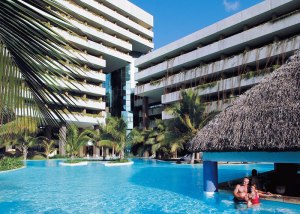
The Clarion Hotel in Portland cut its chlorine use by 87 percent.
The phosphates reduce the chlorine’s effectiveness. Adding a food grade enzyme to the water reduces the phosphate level and allows chlorine to do its work. Not only is less chlorine needed, but it also lasts longer, Cooke said.

The pool was part of a test project with the state of Maine Department of Environmental Protection to help reduce use of the chemical, which has been linked to skin and eye irritations, lung damage and asthma. The project also saved some money.

“It is very easy,” said Peter Cooke, DEP pollution prevention program manager. The agency funded the project with a $30,000 federal grant. Overchlorination is common at public swimming pools because of the high levels of phosphates, Cooke said. Phosphates occur naturally in some water but are commonly added by water treatment plants to prevent corrosion in municipal water pipes.

The phosphates reduce the chlorine’s effectiveness. Adding a food grade enzyme to the water reduces the phosphate level and allows chlorine to do its work. Not only is less chlorine needed, but it also lasts longer, Cooke said.

Don Hopkins, operations manager for the Olympia Companies, property management company of the Clarion Hotel, said regular swimmers at the pool immediately noticed a difference.

“They said it smelled better and the water felt softer on the skin, ” Hopkins said.

He said workers at the hotel also noticed the difference. Hopkins said adding the enzyme to the 30,000-gallon pool saved $200 a month in chlorine costs, compared to the $130 monthly cost of the enzyme. The company is now looking to reduce chlorine at pools at some of its other hotel properties, he said.

For more:  http://www.onlinesentinel.com/news/using-enzyme-reduces-need-for-pool-chlorine_2010-12-21.html#

Comments Off on Hotel Pool Safety And Health: Use Of A “Food Grade Enzyme” Can Reduce High Phosphate Levels In Hotel Swimming Pools That Result In “Overchlorination”, Leading To Guest Eye Irritation, Lung Damage And Asthma

Filed under Guest Issues, Health, Liability, Management And Ownership, Pool And Spa, Technology

Hospitality Industry Guest Health And Safety: Hotel And Spa Owners Must Maintain Clean Workout Facilities, Pools And Spas

Gym Equipment Spreads Skin Infections

  • Staph infections, including those caused by methicillin-resistant Staphylococcus aureus (MRSA) bacteria, can spread through shared gym equipment, mats and towels.
  • Infections tend to occur near a cut or scrape, and on certain body parts (the armpits, buttocks, groin and neck).
  • They start off looking like a large pimple but can swell, become painful and produce pus.
  • If they spread to your bloodstream, they can be life-threatening.
  • Many clear up on their own, but seek medical attention if a fever develops or if the area becomes enlarged, red, tender or warm.

Prevention:

  • Use the alcohol spray or wipes that most gyms provide to wipe off equipment before and after use.
  • Place a clean towel over mats used for doing sit-ups, stretching or yoga.
  •  Don’t share towels with others.
  • Wash your hands frequently with soap and water, or use an alcohol-based sanitizer.
  • Shower after working out. If you have a cut or scrape, keep it covered with a clean adhesive bandage and don’t use hot tubs or whirlpools.

Dirty Pools Teaming With Bacteria

  • Poorly maintained swimming pools are common, allowing bacteria and viruses to cause outbreaks of gastrointestinal illness.
  • Inspections at 3,666 health clubs in 13 states found serious lapses requiring the immediate closing of 10 percent of the pools (Centers for Disease Control and Prevention)
  • Improperly maintained circulation and filtering systems and skimpy disinfection were among the most common problems.

Prevention:

  • Require showers with soap before swimming and wash your hands after using the toilet or changing a baby’s diaper.
  • Don’t use the pool if the water has a strong chemical smell or appears cloudy.
  • Pool water should have little odor and be clear enough that you can easily see the bottom.
  • Chlorine and pH levels should be checked at least twice a day, and the pool’s latest inspection score should be recorded.
  • Chlorine should be 1 to 3 parts per million (4 to 6 ppm for hot tubs), and pH should be 7.2 to 7.8.

For more:  http://www.washingtonpost.com/wp-dyn/content/article/2010/12/20/AR2010122004711.html?wprss=rss_health

Comments Off on Hospitality Industry Guest Health And Safety: Hotel And Spa Owners Must Maintain Clean Workout Facilities, Pools And Spas

Filed under Guest Issues, Health, Liability, Management And Ownership, Pool And Spa, Risk Management, Training