[youtube=http://www.youtube.com/watch?v=tN2gpRcFKAQ]
WARNING: Graphic content. This ad is from the workplace health and safety marketing campaign from Ontario’s workers’ compensation board. Disturbingly effective.
[youtube=http://www.youtube.com/watch?v=tN2gpRcFKAQ]
 (From a KULR8.com article) A bill boosting fines and civil penalties for workplace safety violations will be considered by the full House.
The Wyoming Tribune Eagle reports that House Bill 93 passed the House Minerals, Business and Economic Development Committee on Wednesday by a 5-4 vote. Under the legislation, civil penalties would rise from a range of $5,000-$70,000 to a range of $8,000-$120,000 for each violation.
If the violation causes the death of an employee, the civil penalty amounts would increase to a range of $50,000-$250,000. For an employer with 25 or fewer employees, the minimum penalty would not be less than $25,000.
Fines for failing to fix problems or violating specific areas also would rise
Comments Off on Hospitality Industry Workplace Safety Legislation: Wyoming Legislature Passes Bill Increasing Civil Penalties For Workplace Safety Violations
Filed under Legislation, Liability

Survey results... found that price drives the choice of workers' compensation carrier for 3 out of 4 (71%) restaurant owners and other decision-makers.
(From a Hotelnewsresource.com article)Â Workplace accident prevention apparently remains a persistent problem as nearly half (44%) of restaurant owners and managers reported at least one costly workers’ compensation claim in the past five years-and 10% percent reported five or more claims within the same period.
Despite this accident reporting, a majority (61%) of survey respondents who changed carriers at their last renewal reported switching because of price. Workers’ compensation insurance carriers track policyholders’ loss experience to help determine premiums, as accident frequency can directly affect restaurants’ insurance premium pricing. Service-driven workers’ compensation insurance carriers like EMPLOYERS focus on the potentially significant savings that could be realized through effective use of workplace safety and accident prevention efforts.
http://www.hotelnewsresource.com/article34605Restaurant
_Survey_Finds_Focus_on_Workers__Comp_Price_Trumps_Accident_Prevention_Savings.html
(From a Fosters.com article)Â 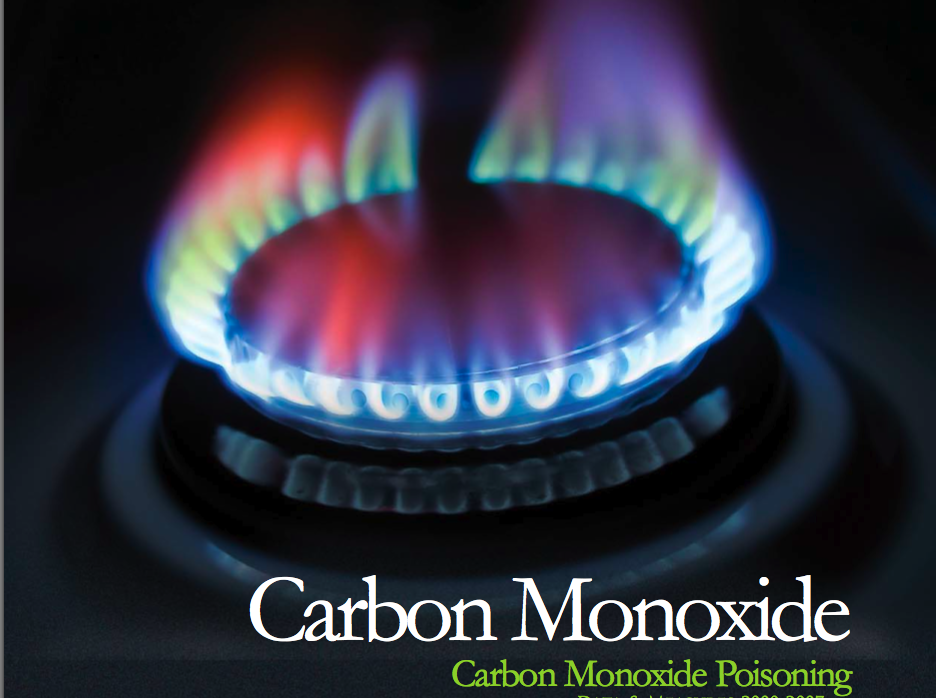 It’s colorless, odorless, tasteless and can kill you without notice.
The potentially lethal amount of carbon monoxide or CO found to be leaking inside the Hilton Garden Inn on Monday is actually considered to be a by-product of combustion of fossil fuels.
According to the Centers for Disease Control and Prevention (CDC) statistics show that each year more than 500 Americans die from unintentional carbon monoxide poisoning. On Monday, a total of 12 people were sickened and taken to the hospital as a result of nearly 600 parts per million of CO being found in the basement of the downtown hotel.
A normal level of the colorless, odorless gas is said to be between 30 to 35 ppm.
“Appliances such as furnaces, space heaters, clothes dryers, ranges, ovens, water heaters, charcoal grills, fireplaces and wood burning stoves can produce CO,” according to the CDC. “It is usually vented to the outside if appliances function correctly and the home is vented properly. Problems occur when furnace heat exchanger crack or vents and chimneys become blocked. Insulation sometimes can trap CO in the home.”
Once the gas is inhaled, it is easily absorbed through the lungs.
The CDC says when CO is breathed in by an individual, it accumulates in the blood and forms a toxic compound known as carboxyhemoglobin or COHb. Hemoglobin carries oxygen in the bloodstream to cells and tissues. When carbon monoxide is introduced to humans it attaches itself to hemoglobin and displaces the oxygen the body’s organs need.
When that happens symptoms can occur that include headaches, fatigue, nausea, dizzy spells, confusion and irritability. Later stages of CO poisoning can cause vomiting, loss of consciousness and eventually brain damage or death.
http://www.fosters.com/apps/pbcs.dll/article?AID=/20100217/GJNEWS_01/702179868/-1/FOSNEWS
(From a BusinessInsurance.com article posting) Legislation that would restrict video surveillance of employees who have filed a workers compensation claim by insurers and self-insured employers has been approved by a Colorado House committee.
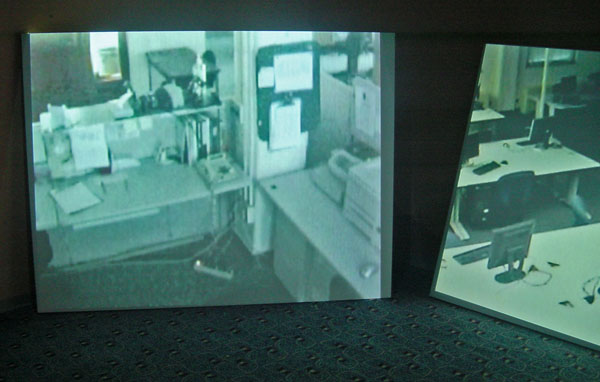
Workplace surveillance would be limited by pending Colorado legislation.
Colorado’s House Judiciary Committee approved H.B. 10-1012, sponsored by state Rep. Sal Pace, D-Pueblo, on a 6-4 vote last week. The bill would prohibit insurers or employers from conducting surveillance of workers comp claimants unless they have “a reasonable basis to suspect that the employee has committed fraud or made a material misstatement concerning the claim.â€
 Claimants would be allowed to ask for an expedited hearing to learn why they are being investigated and individuals conducting the surveillance would be required to respond fully to questions.
 The legislation, which now goes to the Colorado House Appropriations Committee, also sets up a $1,000-a-day penalty for violations. A similar bill is pending in the Colorado Senate.
 Separately, Denver-based Pinnacol Assurance, a state-created workers comp insurer, said in a statement Tuesday that it is prepared to give the state $200 million to remove it from state control become a policyholder-owned workers comp insurer.
http://www.businessinsurance.com/article/20100216/NEWS/100219948
Comments Off on Hospitality Industry Risk Update: Colorado Considers Legislation Limiting Workplace Surveillance Of Employees Who Filed “Workers Compensation” Claim
Filed under Insurance, Legislation, Liability
[youtube=http://www.youtube.com/watch?v=LGFUg4H_13M]
Hospitality Industry Safety Training
Reporting claims in a timely manner not only is cost-effective, but creating an encouraging reporting culture can also promote a successful claims management program.
It is illegal to conceal or fail to submit a workers’ compensation claim.
 Workplace accidents happen due to unsafe conditions, inadequate training and ignoring near-misses. Although accidents can’t be eliminated entirely, injury prevention is an essential component of efficiency and profitability. The goal is to reduce both the frequency and severity of claims. A culture in which employees are encouraged to speak out about safety concerns without fear of reprisal is imperative in averting claims. When a claim does occur, a culture invested in identifying and addressing the root cause will benefit the company. The key to a successful culture change in workers’ compensation reporting is a shift in thinking and behavior that is consistently reinforced by management until expectations are realized.
In a January 2009 article in Proofs Magazine, William Penney says that 69 percent of injuries may never make it into the BLS Survey of Occupational Injuries and Illnesses. The most probable driving force in underreporting workers’ compensation claims is that employers pay the total cost of medical care versus health insurance which involves co-pays. Other factors include a lack of understanding of reporting requirements, economic and/or peer pressure, safety/bonus incentives, an attempt to maintain or gain government contracts or an avoidance of OSHA inspections. When an employee submits a claim under their personal health insurance, the claim does not affect a company’s experience modification factor or workers’ compensation premium.
Â
It is illegal to conceal or fail to submit a workers’ compensation claim. Although it may appear that underreporting workers’ compensation claims is cost effective, studies have shown that this practice often increases costs. Unreported and untreated soft tissue injuries, especially back injuries, may become more severe over time and eventually require more medical care and possibly surgery. The National Council on Compensation Insurance (NCCI) reports that injuries reported within two weeks are 18% more costly than those reported within the first week and injuries reported in the fourth and fifth weeks are 45% more costly. Additionally, claims that are reported late are more likely to be litigated. The NCCI finds that injuries reported within 10 days are 22% more likely to be litigated whereas claims reported 31 days after the loss are 47% more likely to be litigated.
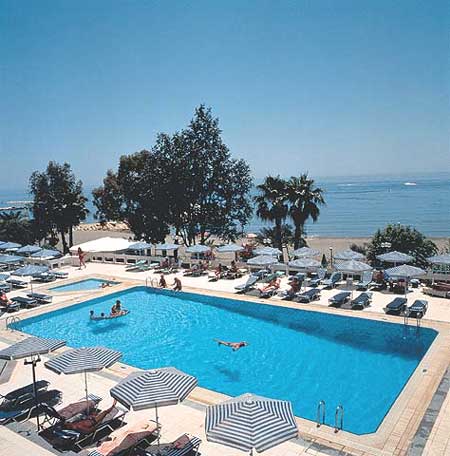
"...compliance with such statutory requirements alone may not be sufficient to ward off a lawsuit in the event of a swimming pool-related injury because the Swimming Pool Industry Standards recommend safety precautions that go above and beyond the statutory requirements of the building and/or health codes..."
(From a HotelWorldNetwork.com article) A Compliance with the applicable building and health codes will make sure that you are not exposed to liability on a Negligence Per Se claim in the event that someone is injured while using one of your pools. However, it is also advisable to make sure your property is in compliance with swimming pool industry standards because the industry standards often go beyond the statutory requirements of the building and health codes.Â
A Negligence Per Se claim is one where an injured party will contend that a defendant has liability exposure because of a failure to comply with applicable statutes, such as building and health codes. In the typical personal injury lawsuit, the plaintiff has the burden of proof in terms of demonstrating the defendant had a duty, that the defendant breached that duty and that the breach was a causal factor in the plaintiff’s injury. In a Negligence Per Se case, once the plaintiff demonstrates the defendant failed to comply with an applicable statute, it creates a presumption that the duty was breached. For example, depending on the size and configuration of the pool(s), the building and/or health codes of most jurisdictions typically require that, at a minimum, the water depth be indicated by signs that are mounted in the pool deck at specified intervals and on the vertical wall in the tile line. Additionally, if there is no lifeguard on duty, then most jurisdictions require a sign advising swimmers of that fact.Â
However, compliance with such statutory requirements alone may not be sufficient to ward off a lawsuit in the event of a swimming pool-related injury because the Swimming Pool Industry Standards recommend safety precautions that go above and beyond the statutory requirements of the building and/or health codes. For example, the Swimming Pool Industry Standards recommend that pools also have the universal no diving symbol placed in areas where the pool is four feet deep or less and recommend that the depth marking be in metric measurements as well as traditional measurements.Â
In the event of a serious injury, an experienced plaintiff’s attorney will argue that the property had an obligation to meet industry standards as well as the statutory requirements.
http://www.hotelworldnetwork.com/injuries/law-qa-go-beyond-pool-safety-requirements-avoid-lawsuits
Comments Off on Avoiding Liability Exposure By Complying With The More Comprehensive “Swimming Pool Industry Standards”
Filed under Insurance
